Article
Passé composé or imparfait? The visual method for telling stories in the past
How to distinguish background scenery (imparfait) from plot-advancing events (passé composé) using the movie-scene analogy and time markers.
- Grammar tips
Article content
The movie-scene analogy: background vs. action
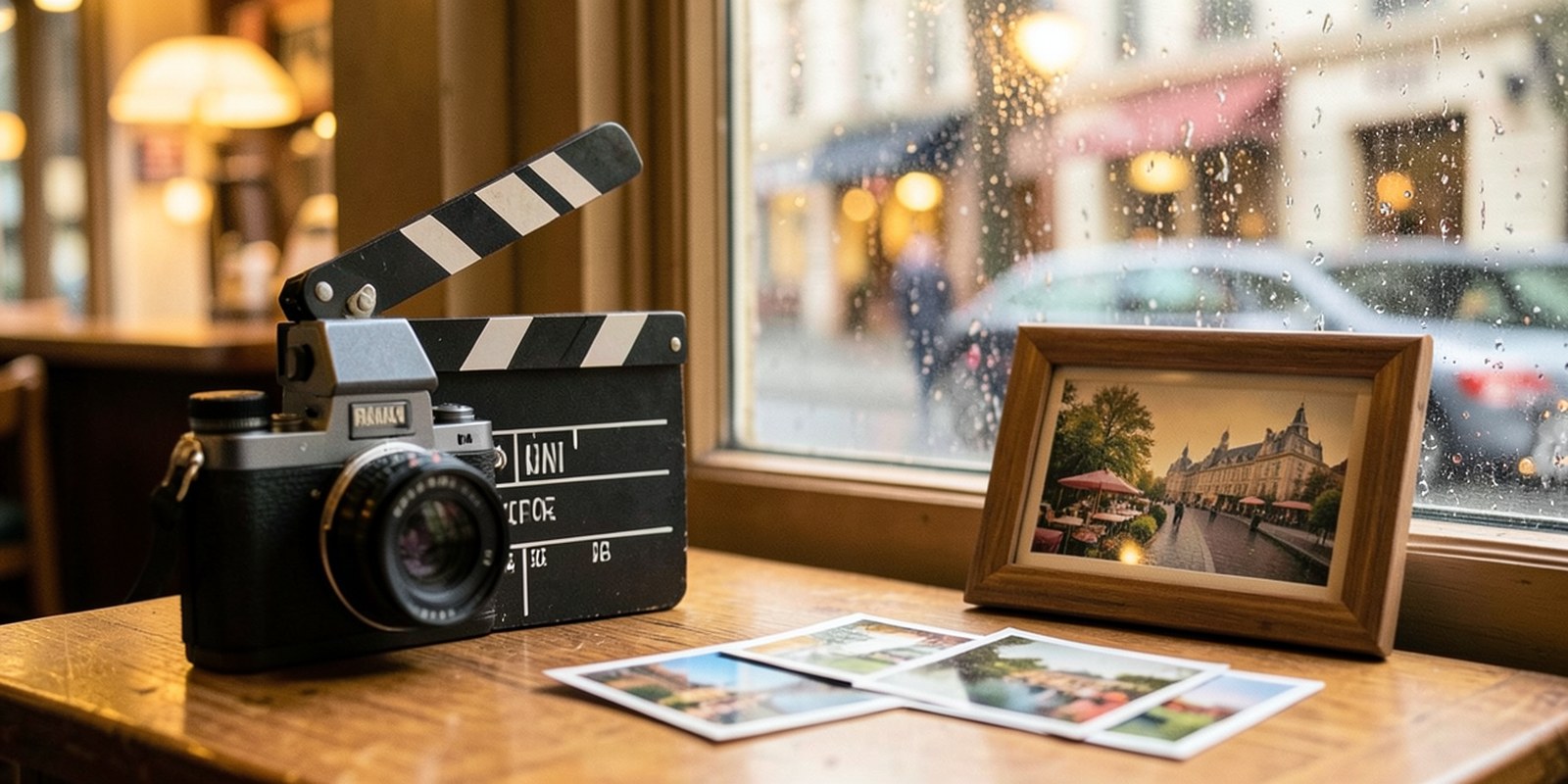
Picture yourself describing a scene from a film. Everything that forms the backdrop before the main event happens—the weather, time, mood, or what people were in the middle of doing—uses the imparfait. As soon as a specific action changes the situation, switch to the passé composé:
“Il pleuvait et je lisais tranquillement au café quand, soudain, Paul est entré.”
1. Three core uses of the imparfait
- Descriptions and states: L'appartement était calme et donnait sur une cour arborée.
- Past habits: Quand j'habitais à Lyon, je prenais le vélo tous les matins.
- Ongoing action interrupted by an event: Nous dînions lorsque le téléphone a sonné.
2. Three core uses of the passé composé
- Single completed events: Hier soir, j'ai réservé nos billets de train.
- A sequence of actions: Elle s'est levée, a bu un café et est sortie.
- Actions with a bounded duration: Il a travaillé trois ans à Montréal avant de revenir.
Did this article help you?
Other articles
- Learning method
Acing the DELF B2 speaking exam: structuring your presentation and arguing with nuance
A 3-part outline, logical connectors, and subjunctive/conditional structures to defend a viewpoint convincingly in front of the DELF B2 examiners.
- Everyday French and culture
Polite French expressions at work, on the phone, and in shops
From “Bonjour” to professional email closings, the essential phrases to soften a request, handle phone calls, and sound natural in France.