Remembering French vocabulary for good through dialogues and context
Why isolated word lists fade quickly and how to combine active listening, visual cues, and spaced practice around real-life scenes.
- Learning method
Article content
Why isolated word lists fall short
Memorizing “guichet = ticket counter” in isolation helps you recognize a word on paper, but rarely helps you produce it in real conversation. Your brain retains words far better when they are anchored to a concrete situation, a voice, and an intention.
1. Always learn a noun with its article
In French, grammatical gender drives adjective and past-participle agreement. Always learn and repeat une ordonnance, un croissant, la monnaie, le loyer rather than the bare noun.
2. Collect ready-to-use chunks (collocations)
Instead of single words, memorize natural verb + noun partnerships straight from real dialogues:
- prendre un rendez-vous / déplacer un créneau;
- composter son billet / changer sur le quai;
- donner sur la cour / signer le bail.
3. The 3-step loop with YupLingo dialogues
- Listen to the full scene while following the word-by-word karaoke highlight to connect sound and spelling.
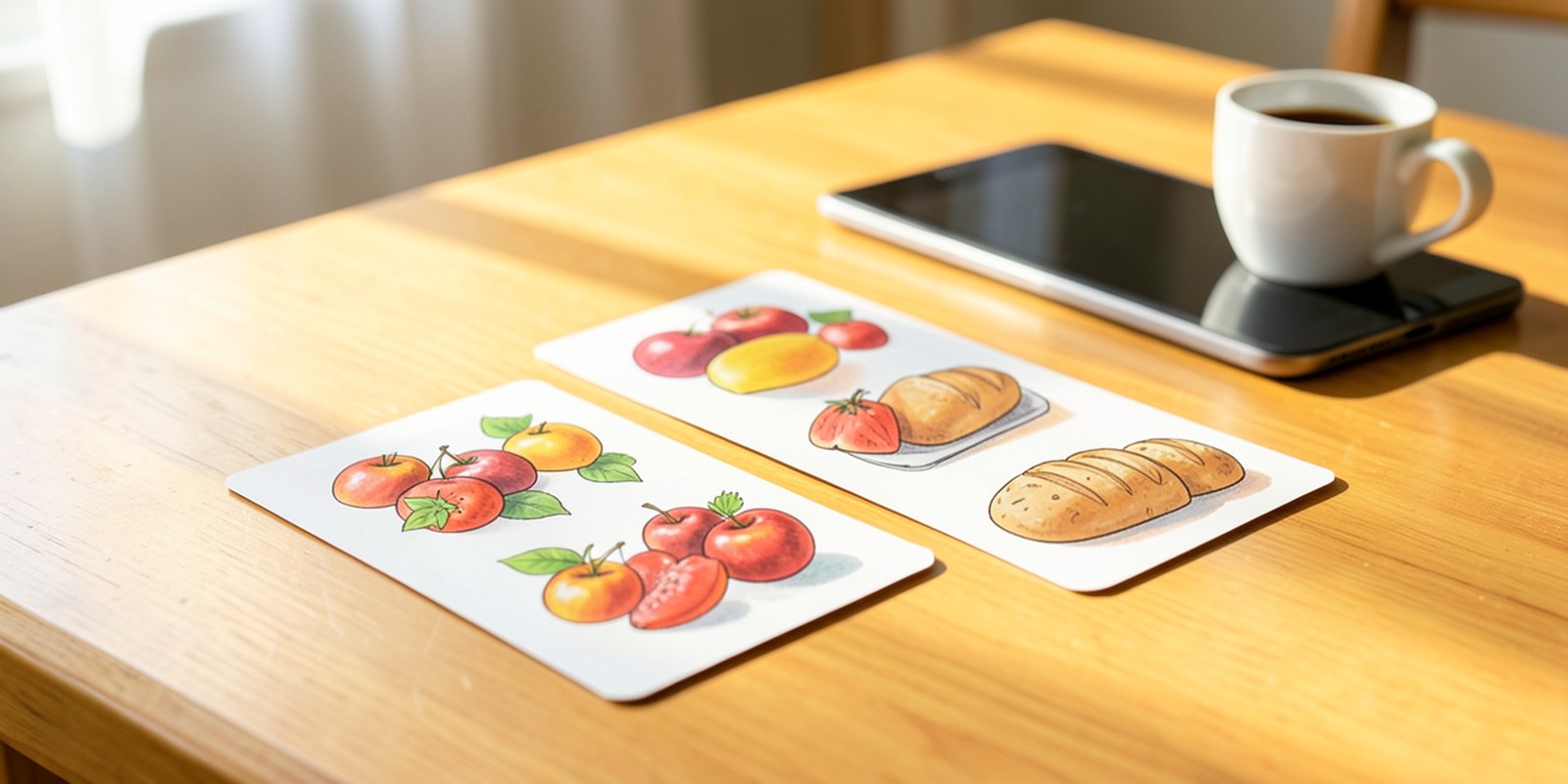
- Review the illustrated vocabulary cards linked directly to the lexicon and verb conjugation tables.
- Lock it into memory right away with a listening, dictation, or word-ordering exercise.
Did this article help you?
Other articles
- Learning method
Acing the DELF B2 speaking exam: structuring your presentation and arguing with nuance
A 3-part outline, logical connectors, and subjunctive/conditional structures to defend a viewpoint convincingly in front of the DELF B2 examiners.
- Everyday French and culture
Polite French expressions at work, on the phone, and in shops
From “Bonjour” to professional email closings, the essential phrases to soften a request, handle phone calls, and sound natural in France.